7. edition
18 April 2026
Key takeaways from the International Monetary Fund-The World Bank Group Spring Meetings 2026.
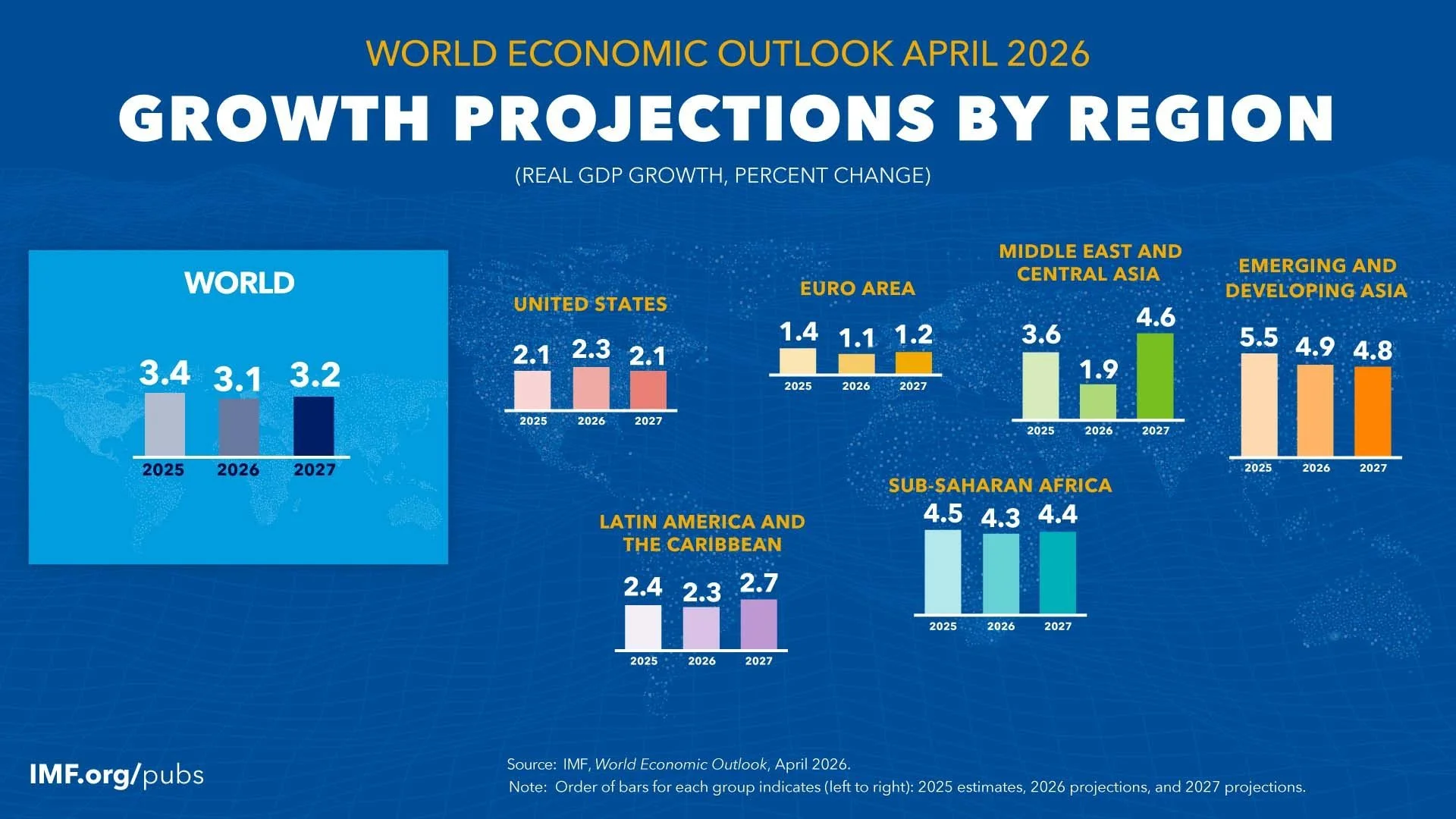
I’ve been following the meetings and publication releases of the IMF and the World Bank Group throughout the week. Here are some key information and issues to be discussed:
The released World Economic Outlook projects a drop in global economic growth from the previously expected 3.3% to 3.1% for this year, with inflation projected to increase to 4.4%. This projection considers limited impacts of the US-Israel-Iran war with the assumption that the disruptions will fade by mid-2026. I applaud the IMF for finally introducing scenarios! In their adverse scenario with larger and more persistent increases in energy prices, global growth would decline to 2.5% in 2026, with inflation increasing to 5.4%.
Under a more severe scenario, global growth would decrease to only about 2%, with headline inflation above 6%. As an economist and foresight strategist, I’ve been advocating for applying scenarios for future predictions. Alternative futures with well-defined potential implications increase preparedness and resilience among these uncertain conditions.
The Global Financial Stability Report highlights global financial risks and potential market turmoil amid the war in the Middle East. It advises policymakers to strengthen financial system resilience by tightening supervision of financial institutions, rebuilding capital and liquidity buffers, and ensuring clear, credible communication to maintain market confidence amid persistent global shocks.
The issues of jobs creation, private investments, and developments in infrastructure, energy security and health dominated the World Bank Group meetings. WBG launched the ‘WaterForward’ initiative, in which the organization, through its partners aim to provide water security for more than 1 billion people by 2030. The President concluded that “we believe that when water moves forward, jobs move forward, industry moves forward, and prosperity moves forward.”
I have two recommendations for strategic consideration:
Think beyond the global macroeconomic figures of slowing growth and increasing inflation, and start already considering the possible implications and spillover effects through the various macroeconomic channels for your business or your country for the medium to long term.
Think in alternative futures using scenarios to enhance your preparedness and resilience. Alternative futures can serve as potential pathways with possible implications. When drivers lead one scenario forward – given the potential implications already estimated – you will be able to prepare ahead and react more quickly than your competitors.