6. edition
31 March 2026
The role of the US dollar in the global economy and the results of the latest World Trade Organization (WTO) Ministerial Meeting.
1) I attended a webinar of the Economist Intelligence: EIU about dollar liquidity and global debt. Here are a few shared insights to be discussed:
The depreciation of the US dollar in recent months is about to continue in the medium term with a potential strengthening in the first half of 2026. This is not seen as a sign of dedollarisation.
The supremacy of the US dollar and US-tied payment systems will remain in the foreseeable future. The US dollar is held as reserve currency in biggest volumes by central banks, the euro is stable second, however there is no other currency at scale yet to step into this role.
The dominance of the US dollar is further strengthened by the dominant currency paradigm (one currency supply chain resilience, commodities priced in dollars, cheaper dollar risk hedging) together with the fact that nearly half of global trade is invoiced in dollars. No change is expected in this regard anytime soon.
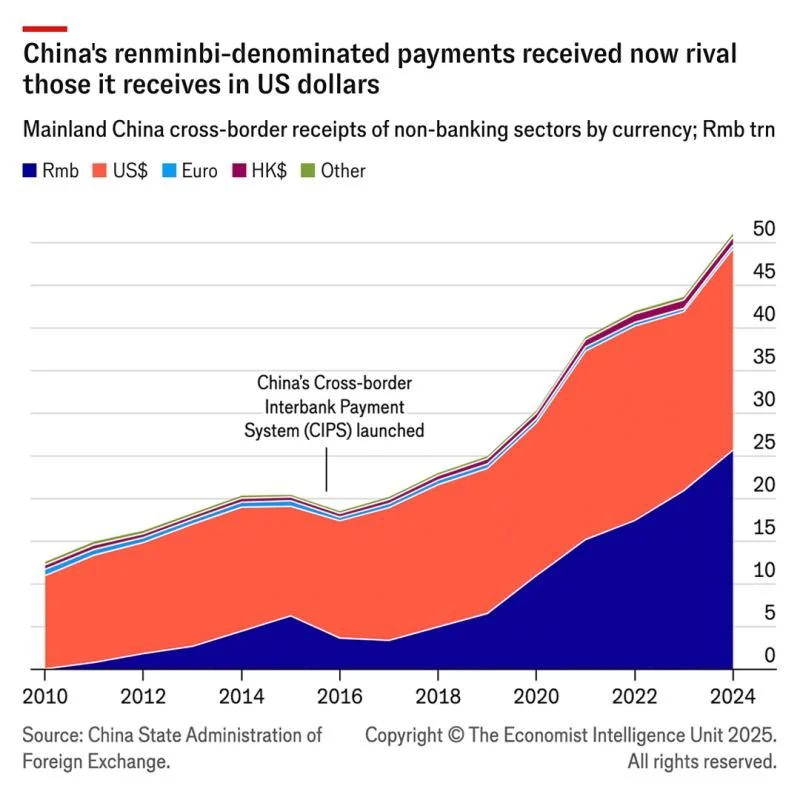
When it comes to diversification of currency use, the Euro and the Renminbi are top candidates but they both face significant barriers: the euro misses a deep, unified market; while the Renminbi faces capital controls and limited liquidity. However, the Cross-border Interbank Payment System (CIPS) volumes has been rising very fast in the past years.
In my opinion, despite the highlighted crucial trends and factors, the world is moving away from a unipolar, US dominated global economy towards a new multipolar order. I see the dedollarization as a parallel – perhaps regional – process that could be led by the Chinese Renminbi taking more share in international trade and financial transactions along with other currencies. Yes, it means that exchange rate risk is back on the table when trading but it may be lower than the increases in input price, insurance and transportation costs, as consequences of US military aggression and trade policy uncertainties.
2) The 14th Ministerial Meeting of the World Trade Organization took place in Cameroon in the past days with no significant results, no matter the very much needed reforms of the organization. It is disappointing to see the fragmentation and deep divide among the countries. To me, it raises the following questions: are we at the brink of completely losing the only multilateral trade rule setting power and moving towards also a so called ’multipolar’, more regional or ’like-minded’ group based order? Shall we finally admit that a consensus-based decision making is not feasible in the 21st century because there is no ’one-size-fits-all’ for 166 countries? Then what’s next for the organization and for global trade policies?