12. edition
20 August 2026
The emergence of digital twins and Citiverses.
Being a lecturer and speaker myself, I wonder how soon we might be replaced by our own digital twins or avatars, trained on most of what we know. Realizing that my creative thoughts and ideas could not be created by my digital twin, because it can only draw on existing knowledge that has already been written or recorded, it gives us, humans, some breathing space … at least for a little while!
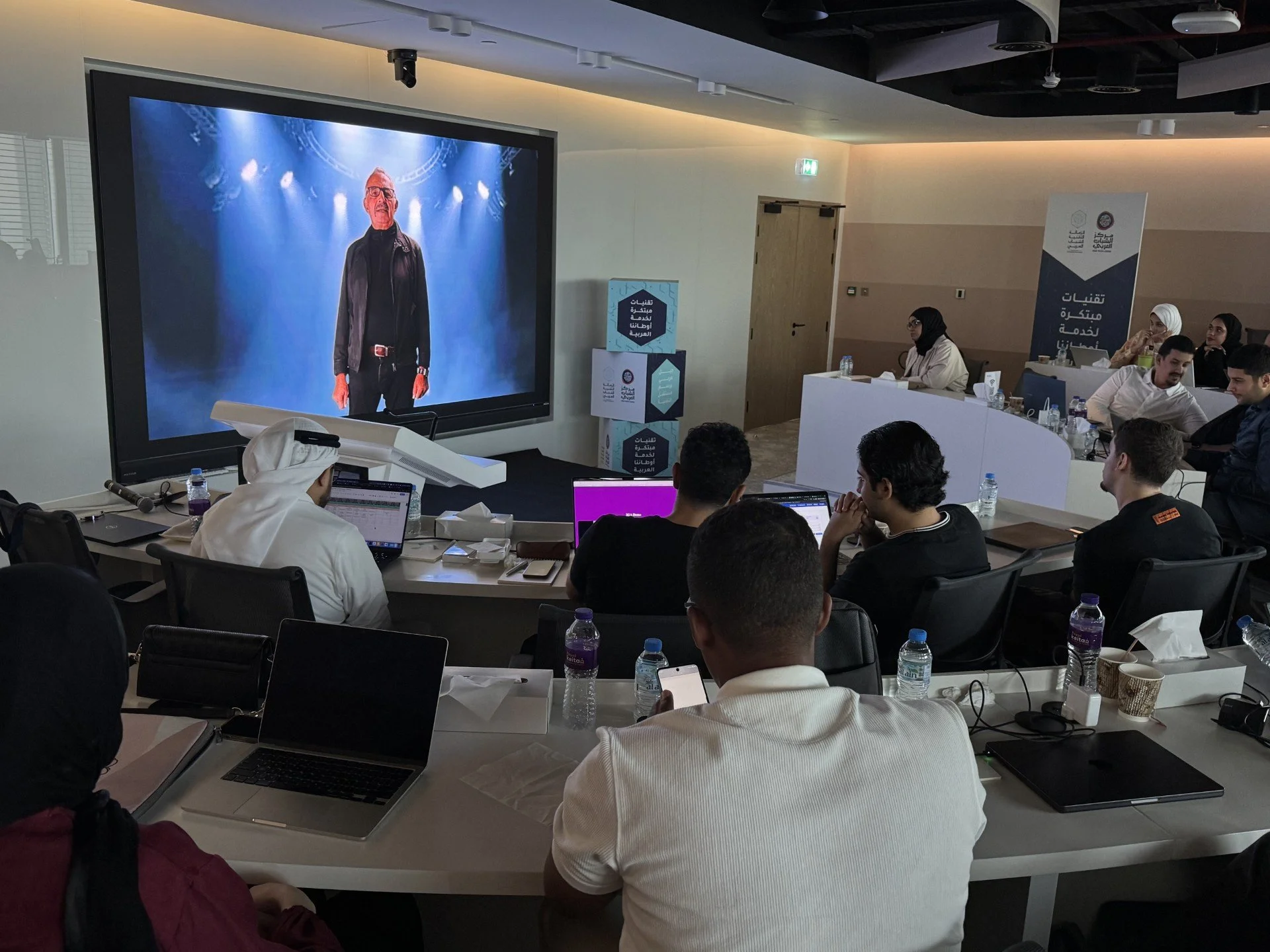
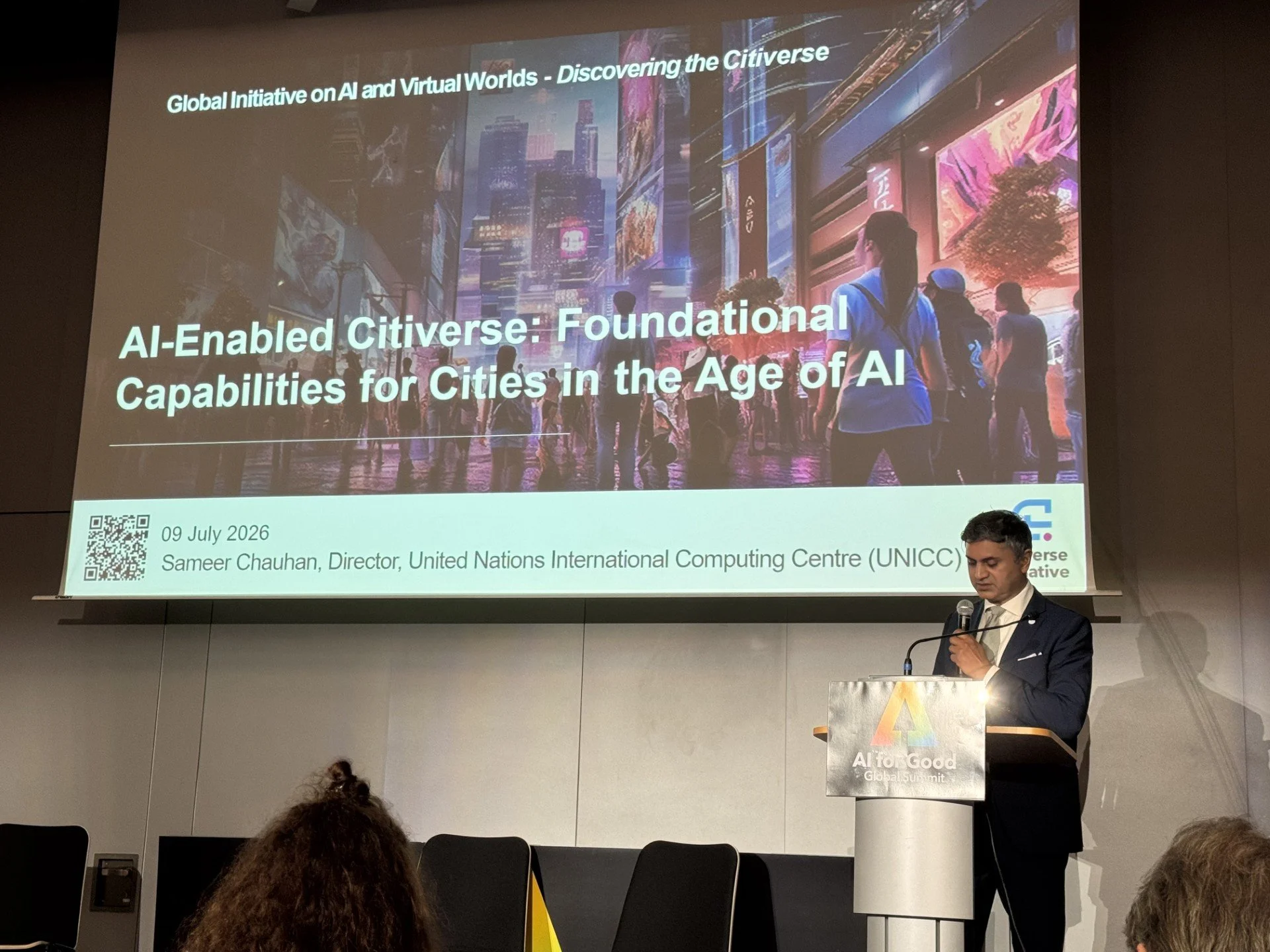
Last year, I had the honor to assist with the launch of AI Jay, the digital twin of Dr. Jamil El-Imad, as part of the Arab Youth Technology Fellowship Program in Abu Dhabi. AI Jay gave a presentation on the future of healthtech and answered many questions live from participants. AI Jay was trained on Dr Jamil's publications and video recordings, spanning decades of innovation and ideas, now digitally preserved. At the AI for Good 2026 Global Summit, the ‘Foresight with a heartbeat’ session showcased several Human-First Digital Twins who answered the audience's questions live. Then Ray Kurzweil's digital twin, RAI, made its public debut on Center Stage, built by Kurzweil Technologies Inc. together with Praxis AI.
Digital twins also came up in the summit's session on cities, ‘Cities That Think and Act’. Instead of just monitoring what a city is doing, simulations can be used to assess what it could do: a flood response, a transit change, a new power grid, all tested virtually first. A city could become more proactive and more resilient by testing its ideas and their potential impact more precisely. City digital twins and Citiverses are still being piloted, and a few have already made their debut with great success. I am a member of the ITU's thematic group on Future Foresight for Cities, which develops and collects frameworks to support cities in planning for the longer term in the era of AI and digital twins. I believe that alternative scenarios generated by foresight exercises could use digital twins for simulation to assess strategic implications and potential impact. These tools could strengthen cities preparedness and enhance their future-readiness.
The digital twin market is now scaling at over 30% a year. Do we, humans, really have the breathing space for a little while? What do you think?